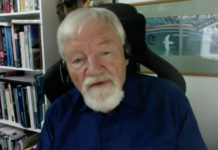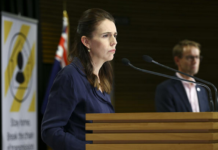




There is no doubt that Donald Trump’s attack on Venezuela was illegal, former prime minister and UN leader Helen Clark says.
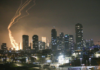
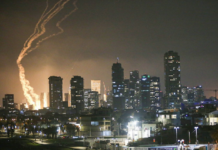
Over the weekend, the US attacked the Venezuelan capital Caracas and captured the South American nation’s president and his wife, citing alleged drug offences.
Nicolás Maduro is now being held in a federal jail in New York City, and is expected to appear in court this week.
- READ MORE: Trump’s gift-wrapped Maduro package has done the world a favour — revealing what a lie US foreign policy really is
- Venezuela army ready to ‘confront imperial aggression’ after Maduro seized

Speaking to RNZ’s Morning Report, Clark said there was no argument for the steps the US had taken.
“Article 24 of the UN Charter says states must refrain from using military force against each other and respect their sovereignty.
“There is a case for Maduro appearing before a court — that should be the International Criminal Court — on charges for crimes against humanity and there’s quite a long list of those that have been documented by various UN bodies over the years but this operation by the US . . . is illegal.”
There was not an argument to be made that removing Maduro was in the security interests on the US, she said.
‘Not self-defence’
“There’s no evidence that the US was able to act in self-defence because it was not about to be attacked by Venezuela. So the self-defence argument does not apply at all.”
Hard not to conclude that 🇺🇸 intervention in #Venezuela is a breach of international law. Maduro was a dictatorial ruler presiding over arbitrary detention & torture of opponents. Iraq 2003 intervention, however, suggests unpredictable path ahead: https://t.co/4qjeENjpAH
— Helen Clark (@HelenClarkNZ) January 3, 2026
While some people in Venezuela were celebrating Maduro’s capture in the hopes it would create more stability, Clark said this might not be the case.
“The worry with the president of other such interventions, when you take out a leader of an apparatus and then if you try to dismantle that apparatus by external forces, as was the case with Iraq — and I suppose, to some extent, with Libya — is that you create more instability and chaos,” Clark said.
“We don’t really know at this point what the US’s even short-term, let alone medium-term plans are. There’s been, effectively a warning by President Trump this morning that if the acting president, Ms Rodriguez, doesn’t play ball, she will ‘pay a price even bigger than Maduro’.
“What does this mean? Will she be literally, physically taken out? Killed? So this is a very unstable, unpredictable, uncertain situation at the moment.”
On Sunday, Foreign Affairs Minister Winston Peters made the first public statement from New Zealand on the situation.
“New Zealand is concerned by and actively monitoring developments in Venezuela and expects all parties to act in accordance with international law,” Peters said in a post on X (formerly Twitter), using the official Minister of Foreign Affairs account.
NZ ‘stands with Venezuelan people’
“New Zealand stands with the Venezuelan people in their pursuit of a fair, democratic and prosperous future.
Clark said the statement was a “good start”.
RT @WhiteHouse: Nicolas Maduro on board the USS Iwo Jima. pic.twitter.com/Y4wzZM5qde
— Donald J Trump Posts TruthSocial (@TruthTrumpPost) January 3, 2026
New Zealand was known for following and upholding international law and Peters’ statement was consistent with the country’s long-held position, she said.
On Sunday, international relations Professor Robert Patman of the University of Otago described the US’ military actions against Venezuela as an “audacious move”.
“It’s a direct challenge for countries like New Zealand, which support the view that international relations should be based on rules, procedures and laws,” he told RNZ’s Worldwatch.
Patman said while many would be pleased to see Maduro gone, that did not mean they would be happy the US “violated Venezuela’s sovereignty”.
He believed New Zealand’s response to the US action in Venezuela should be firm and robust.
This article is republished under a community partnership agreement with RNZ.